
And why networking devices are finally getting the attention they deserve
The ITAD Europe 2026 in Nice brought together a cross-section of the global ITAD and circular technology ecosystem, including processors, resellers, OEMs, compliance specialists and software providers.
More importantly, the event itself set a strong benchmark. For a first edition in a new territory, it was exceptionally well run, well organised and genuinely valuable. The level of engagement across both days made that clear.
Over the course of the event, several consistent themes emerged. These were not abstract trends, but real operational challenges that businesses are actively dealing with today.
So, what stood out?
The easy wins in ITAD are largely gone
For years, the industry has focused on high volume, standardised processes across laptops, desktops and servers. That model has now matured.
As a result, margins have tightened, processes are well understood and differentiation is harder to achieve. Many organisations told us they have already extracted most of the available efficiency from these traditional asset streams.
So where does growth come from next?
Increasingly, attention is shifting towards networking equipment. Not because it is straightforward, but precisely because it is not.
Networking devices are the next operational bottleneck
At the same time, switches, routers, firewalls and access points are becoming a larger part of ITAD volumes, particularly in enterprise and data centre environments.
However, these devices behave very differently from more traditional asset classes.
In practice, processes vary widely across vendors and models. Engineer skill levels directly influence outcomes. Manual CLI based workflows struggle to scale, while throughput remains low and margins are quickly eroded by time.
Put simply, networking is where operational friction still exists. And where friction exists, there is opportunity.
The compliance gap is real and widely acknowledged
At the same time, the industry is becoming far more open about data risk in networking devices.
This is no longer a theoretical concern.
Many organisations now recognise that factory resets do not equate to data sanitisation. In reality, devices often retain recoverable data after a reset. As a result, evidence and auditability are becoming essential, not optional.
Standards such as NIST, ADISA and SERI through R2v3 are increasingly shaping expectations across the market.
However, a gap still exists between policy and execution. Organisations do not just want to say devices are wiped. They need to prove it.
Automation is now essential
Because of these challenges, manual processes are becoming commercially unsustainable.
Labour costs continue to rise. Skilled engineers remain difficult to find. At the same time, customers expect consistent, repeatable outcomes.
As a result, the industry is moving towards automation as a baseline requirement.
This is particularly true in networking, where processes are complex, device behaviour varies and repeatability is difficult to achieve.
In this context, automation is no longer an efficiency gain. It is operational infrastructure.
Evidence is becoming the product
Alongside automation, another shift is taking place.
Historically, data erasure has been treated as a process step, something required before resale or disposal. Now, organisations are positioning it as a service in its own right.
Customers are asking for verifiable outcomes, standardised reporting, audit ready documentation and the confidence to support reuse and resale.
As a result, the output is no longer just a wiped device. It is evidence that stands up to scrutiny.
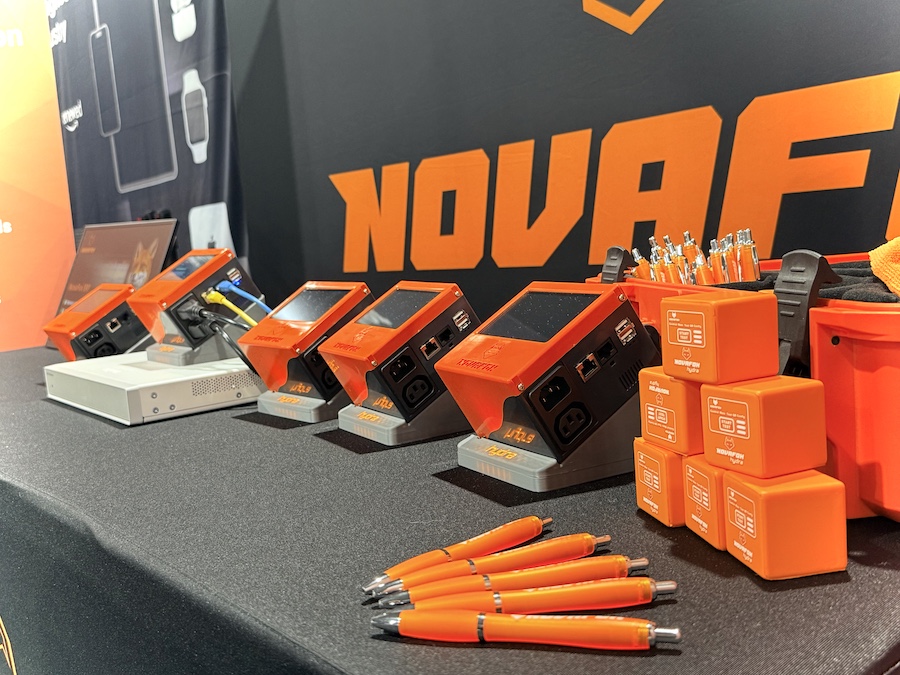
Where Hydra fits into this shift
Taken together, these themes point to a clear direction of travel. They also align closely with how Hydra has been designed from the outset.
Rather than treating networking devices as an extension of existing workflows, Hydra approaches them as a distinct category with specific requirements.
It delivers automated, vendor aware processes that remove reliance on manual CLI. It enables consistent and repeatable workflows regardless of engineer skill level. It aligns with industry standards such as NIST and R2v3. It produces certificate driven outputs designed for audit and compliance.
More importantly, it reflects a shift in mindset.
From processing devices to delivering verified and compliant outcomes.
Final thought
ITAD Europe did not introduce entirely new ideas. Instead, it confirmed that the industry is aligning around a new set of priorities.
Networking devices are no longer edge cases. Compliance expectations are increasing. Automation is becoming essential. Evidence is now central to value creation.
The organisations that adapt to this, both operationally and commercially, will define the next phase of the ITAD market.
